
Between Illusion and Reality: The Kurdish Dream of Rojava

By Ola Rifai
1/10/2026
The 2011 uprising marked a historic turning point for Syria’s Kurds, opening a window of opportunities that transformed Kurdish identity from banishment to empowerment. After years of marginalisation under Arab nationalist policies and repression by the Assad regime, Kurds emerged as an influential actor on the Syrian stage.
Yet the Kurdish community, like other ethnic and religious communities in Syria, did not represent a monolithic identity group. From the early days of the uprising, the Kurdish political landscape in northern and eastern Syria has been shaped by competing visions and agendas ranging from moderate to radical. Among the most prominent actors were the Democratic Union Party (PYD) and the Kurdish National Council (KNC), a coalition of largely leftist parties. Over time, however, the PYD consolidated power and became the dominant force. Through military control and the provision of basic services, it established a quasi-autonomous administration and emerged as the de facto ruler of Eastern Syria.
Throughout thirteen years of conflict, the PYD shifted many alliances, engaging at different moments with the Assad regime, Russia, and the United States. Its decisive role in the fight against ISIS granted international legitimacy. At the same time, the Kurdish administration assumed responsibility for some of the conflict’s most sensitive files, the al-Hol camp, which is housing around 27,000 ISIS-linked families.
The fall of Assad, however, dramatically swung the balance of power and marked a critical juncture as significant for the Kurds as March 2011. The rapid consolidation of authority in Damascus, coupled with unexpected domestic and regional backing for the new government, pushed Kurdish forces into a precarious position. Years of armed confrontation and mutual distrust resurfaced, complicating any prospects for smooth integration.
Kurdish leaders appeared acutely aware of this renewed vulnerability. Agreements announced in March and April last year on integration and territorial arrangements—particularly those concerning Kurdish-held areas in Aleppo—seemed largely tactical and symbolic. They lacked substance and credibility, offering little reassurance of a genuine political settlement.
Aleppo Clashes: A Warning Sign
The bloody clashes that took place earlier this week in the Kurdish-held neighbourhoods of Sheikh Maqsoud and Ashrafieh in Aleppo reflect this new reality and signal a deeply problematic and complex phase ahead. The PYD’s military escalation and the use of Iranian-made drones striking civilian targets proved to be a fatal strategic miscalculation with serious political and military consequences.
Government forces regained control of the contested areas with both international approval and notable domestic support. Approximately 150,000 civilians—Arabs and Kurds—were displaced and later secured in shelters administered by the government. Meanwhile, images of Kurdish fighters evacuated in green buses evoked familiar and painful memories for many Syrians. These same buses had once transported rebels from regime-held areas to Idlib. The repetition of this scene has only fueled polarisation, resentment, and hate speech.
The Kurdish leadership today finds itself in a precarious position, seeking leverage for negotiation while facing increasingly limited options. Thus, PYD must urgently reassess its political strategy and confront the harsh reality: there are no reliable allies on the ground. Neither Israel nor remnants of the old regime offer sustainable guarantees.
On the other hand, while the government in Damascus has achieved significant military and political gains, it has not resolved the Kurdish question. Pushing Kurdish forces eastward into areas dominated by tribal Arab communities would risk reproducing instability rather than addressing the roots of the conflict. More importantly, Integration cannot be reduced to a narrow security arrangement; it must extend to political, administrative, and social dimensions. After the use of coercion, the moment has come for genuine power sharing and inclusive governance.
Symbolic gestures alone are insufficient. The appearance of Aleppo’s governor distributing red flowers to displaced Kurdish families and the efforts of civil society organisations providing humanitarian aid, while extremely positive, do not substitute for trust-building measures. The government must institutionalise power sharing and, crucially, confront rising polarisation and hate speech targeting Kurds.
Mazloum Abdi, PYD’s leader, has spent years alongside Abdullah Öcalan and witnessed both the rise and collapse of the PKK’s ambitions in Turkey. His former mentor ultimately grasped the limits imposed by geopolitics and the absence of reliable allies for the Kurdish quest for separation. That lesson remains relevant today.
The Kurdish dream of Rojava thus remains suspended between illusion and reality: a fragile experiment shaped as much by opportunity as by uncertainty, yet one that could still secure a durable place within Syria’s future and within its borders.
Two neighbouring cases could serve as daily reminders for Abdi: one in Erbil, where Kurdish autonomy survives through negotiated compromise, and another in southern Turkey, where confrontation led to the collapse of Kurdish ambitions
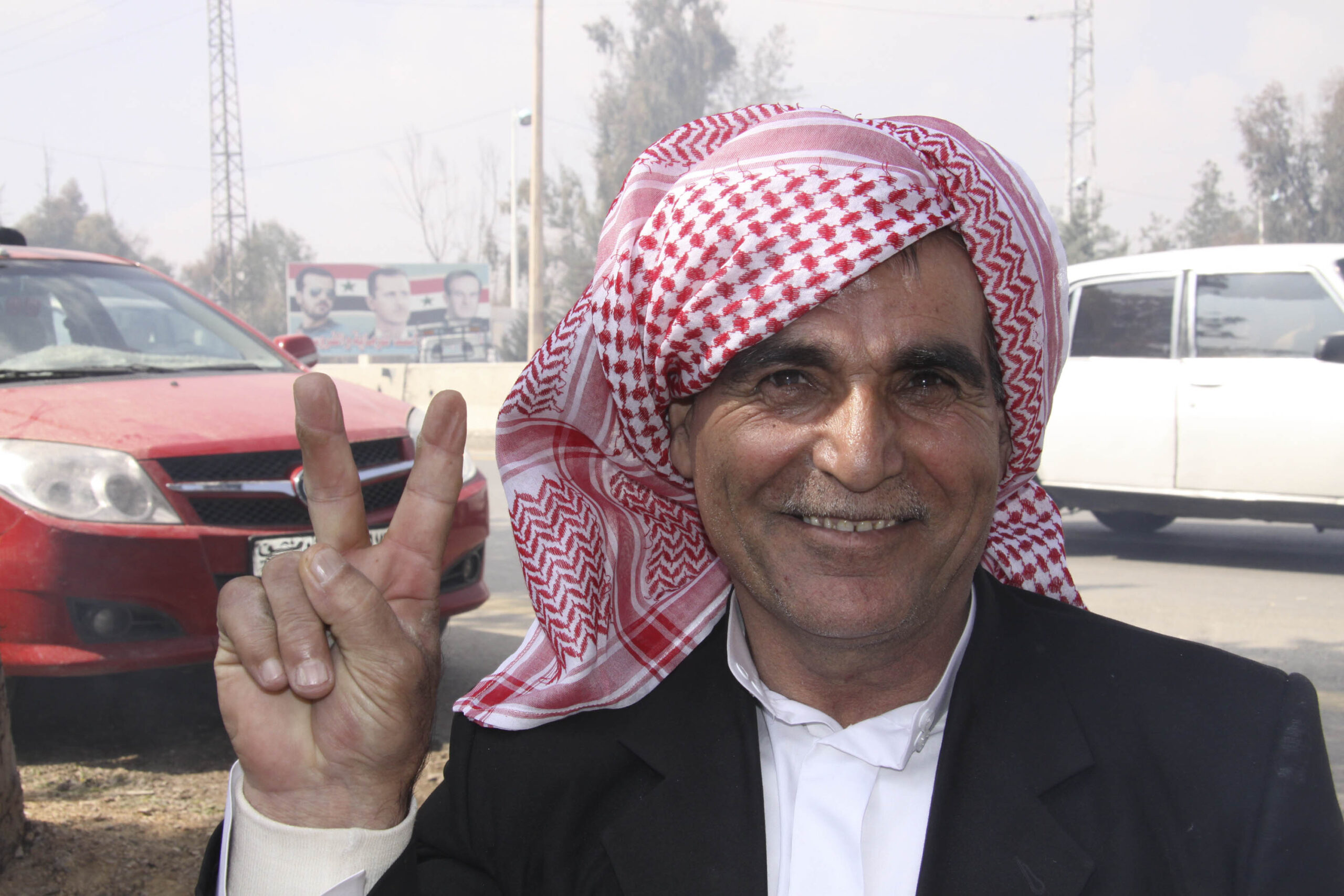
( A Kurdish man pauses for a photo during a family picnic to celebrate Nowruz, at the edges of Damascus, Syria, March 21, 2009 )