
The Fall of Assad: A New Dawn Shadowed by Challenges

By Haian Dukhan
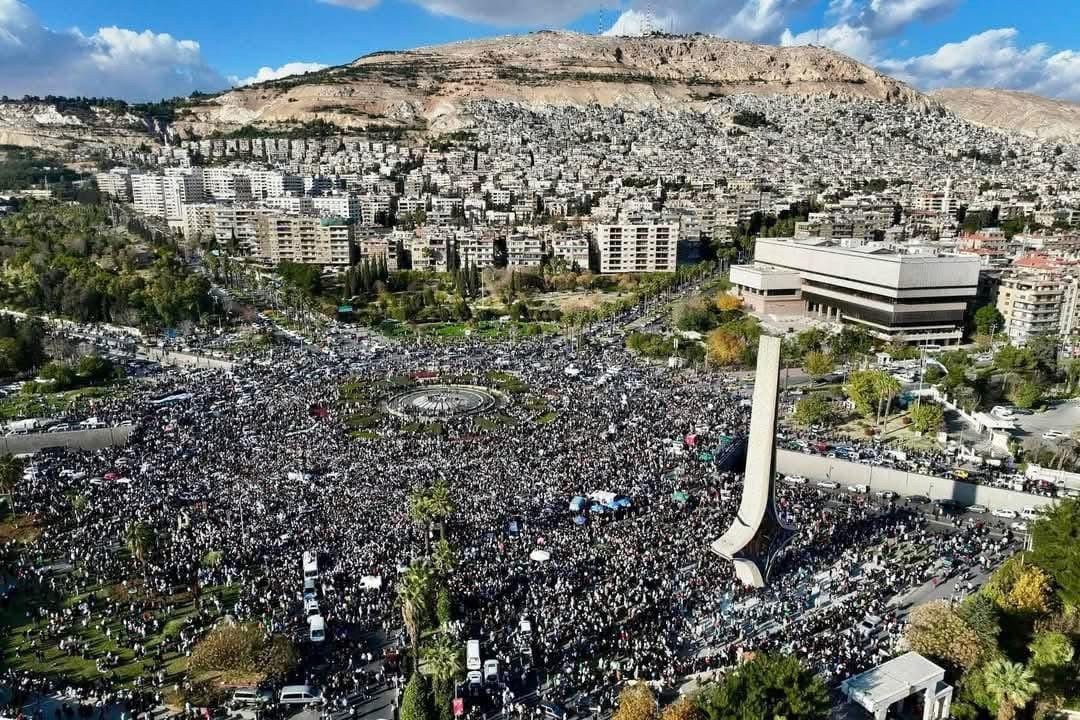
The fall of the Assad regime marks a pivotal moment in Syria’s history after 54 years of authoritarian rule, standing as a testament to the determination and resilience of Syrians who endured decades of systemic oppression and fought for their basic freedoms. This moment echoes other historic collapses of oppressive regimes, such as the Fall of the Berlin Wall and the Soviet Union, representing a universal rejection of tyranny and the dismantling of a system that denied its citizens their dignity. The collapse of the regime was particularly humiliating for Bashar al-Assad, who once claimed that patriotic leaders never flee but remain to fight for their country. His actions starkly contradicted this assertion, exposing the hypocrisy that characterised his rule.
The challenges ahead are significant. Rebuilding Syria will require addressing the destruction caused by years of conflict, fostering political and social reconciliation, and creating systems of accountability to ensure justice for the atrocities committed. These tasks demand pragmatic strategies and inclusive leadership to bridge divides within Syrian society. The international community’s role is to provide targeted support that respects Syria’s sovereignty and aligns with the aspirations of its people, avoiding external interference that could hinder progress. While the path forward is uncertain, the focus must remain on establishing effective governance, rebuilding institutions, and prioritising the welfare of Syrians above all else.
Many analysts attempt to strip the Syrian people of their agency in the current events, arguing that the fall of the regime was orchestrated by external actors like Turkey and Qatar, who armed the rebels and planned the uprising. This narrative reduces the sacrifices of Syrians to mere tools manipulated by outsiders, overlooking their active role in shaping these outcomes. A more accurate perspective involves understanding the interaction between structure and agency. Idlib, over the past decade, became a repository for individuals displaced by the regime’s brutality. This accumulation of collective grievances transformed Idlib into a stronghold for resistance, where rebels, having witnessed the destruction of their homes and towns, anticipated the regime’s eventual assault and strategically prepared for it. Their actions embodied the Arabic saying: “They acted first before the regime could act against them,” seizing the moment to strike pre-emptively and effectively.
The structural conditions also played a significant role in enabling this offensive. The regime’s weakened position was exacerbated by the diminished military presence of Hezbollah and Iran due to Israeli airstrikes, and Russia’s focus on the war in Ukraine. While Turkey certainly benefited from this power vacuum and provided a green light for the offensive, attributing the success solely to external factors ignores the agency of Syrians who capitalized on this opportunity. This was not just a victory for HTS but also for other factions, including the Syrian National Army, southern rebels, Thuwar al-Rastan and Talbisa, and tribal groups from Deir Ezzor and Palmyra. Together, these groups harnessed both their accumulated grievances and the weaknesses of the regime and its allies to achieve this milestone, underscoring the interplay between local agency and broader structural dynamics.
Secondly, it appears that the regime’s core support base from the Alawites was significantly weakened by a decade of war and economic sanctions. The Syrian army’s lack of resistance during recent events surprised many rebels, who did not expect the regime’s defence lines to collapse so quickly. This fragility reflects the broader disillusionment within the Alawite community, as highlighted in our report published two months ago. Many Alawites we interviewed a couple of months before this offensive expressed frustration and anger toward the regime, feeling that they had been exploited as tools to protect the ruling elite. One interviewee remarked, “The regime used us to shield itself while ignoring our suffering,” capturing the sense of betrayal felt within the community. The economic devastation has exacerbated this discontent, with many lamenting the loss of livelihoods and opportunities while regime-connected elites prospered.
The devastating toll of the war on the Alawite community, both in human and economic terms, has left deep scars. While the community displayed significant cohesion from 2012 to 2015, this unity has since been replaced by fragmentation as the war dragged on. As noted in the report, “the enormous human losses caused a collective shock,” with countless families losing members to the conflict. This sense of sacrifice without recompense has bred resentment. One respondent summarized, “We fought and sacrificed, but only to see the privileged few grow wealthier.” This has fractured the community’s loyalty to the regime, leaving it increasingly isolated and struggling to maintain cohesion among its traditional supporters. These dynamics underscore the regime’s eroding capacity to mobilize its base, revealing a precarious foundation amidst ongoing challenges.
These were some of my quick thoughts on the collapse and why it happened. However, I think we should now set our expectations lower as the initial euphoria begins to fade. The reality is that there will likely be a large amount of chaos, and we need to brace for the complexities that follow such monumental shifts. We should not perhaps be very concerned about HTS ideology. While HTS managed to govern a small province in Idlib with some degree of stability, it would not possible for its leader, al-Jolani, to implement this governance model on a national level or to effectively manage the various factions in Syria. The dynamics within Syria are far too fragmented and complex for any single faction to assume control effectively. However, I am concerned about HTS attempting to bolster itself in urban centres while leaving rural areas weak and vulnerable to the influence of tribes, other militias, or even the resurgence of ISIS in the desert.
What concerns me more is the potential for militia fragmentation and inter-fighting, akin to what happened in Libya after the fall of Gaddafi. The absence of a centralized authority creates fertile ground for power struggles, as different groups vie for dominance and resources. This scenario could lead to prolonged instability, making the establishment of cohesive governance incredibly difficult. The risk is not only in the potential violence but also in the fragmentation of territories, with each militia controlling its own sphere of influence, further complicating efforts toward national unity and recovery.
Secondly, there is significant anger from the families of prisoners and the disappeared towards the regime and its supporters. Calls on social media are growing louder, demanding revenge, even from prominent Syrian media figures. Just a couple of days ago, these calls took on a sectarian tone, with suggestions such as bombing Qurdaha, the birthplace of Hafez al-Assad, or destroying his grave. Just yesterday, rebels burned the monument built over Hafez al-Assad’s grave, symbolizing the depth of resentment against the regime.
Another stark example of this revenge-driven atmosphere is the execution of Jalal al-Daqqaq, a regime figure in Hama infamous for killing hundreds of people and reportedly feeding their throats to a lion he kept. Such acts underscore the volatile situation and raise critical questions about how the new government will address large-scale revenge attacks. What people need is not just transitional justice but also truth and reconciliation processes and proper investigation committees. The international community must intervene to support these efforts, ensuring accountability while preventing cycles of retribution and fostering a pathway toward national reconciliation and justice.
We have the issue of Kurdish-Arab co-existence in eastern Syria, which remains a critical and unresolved challenge. Currently, the Syrian Democratic Forces (SDF) maintain control over the region, bolstered by the protection of the American military presence. However, there is widespread anger and frustration among the local Arab population regarding how the SDF has managed the region. Many Arabs feel marginalized, both politically and economically, under the current governance structures. This tension is exacerbated by a lack of equitable resource distribution and perceived favouritism toward Kurdish interests, further straining relations. As the geopolitical situation evolves, especially if the U.S. military withdraws or reduces its presence, the question looms large: what is the future of Arab-Kurdish relations in eastern Syria? Without a comprehensive strategy to address grievances, foster inclusivity, and build trust, the region risks falling into deeper instability. The challenge lies in creating a governance model that ensures fair representation and reconciliation, preventing the escalation of tensions into outright conflict.
The new government needs to ensure true representation of the Kurdish ethnic component, including the formal recognition of the Kurdish language as part of Syria’s cultural diversity. Additionally, Kurdish officials must acknowledge their wrongdoing toward the Arab population since 2014, addressing grievances over marginalization and mismanagement. Acknowledging past mistakes and fostering mutual respect between communities is crucial for building trust and a sustainable coexistence in eastern Syria. Only by addressing these core issues can the region hope to move toward stability and unity.
The country is currently under Western sanctions, but the main rebel group that achieved the victory is designated as a terrorist organization, and this is the big elephant in the room. How will reconstruction be achieved without lifting these sanctions? The challenge is multifaceted: the Syrian economy is in shambles, basic infrastructure is severely damaged, and millions of citizens are displaced internally and externally. Reconstruction requires significant financial and material support, much of which cannot flow into the country without the easing of sanctions. Yet, the designation of HTS as a terrorist organization complicates international engagement further. Will the United States and its allies consider removing this designation, or will they find alternative ways to engage without directly empowering HTS?
Additionally, there is the question of how humanitarian aid and reconstruction funds can be channelled into Syria without violating international laws and policies tied to sanctions. The designation of HTS creates a paradox: while it was instrumental in achieving military success, its extremist past and governance model remain a source of contention for Western governments. Even if the U.S. were to maintain the designation, could there be a pathway for targeted sanctions relief or exceptions to facilitate rebuilding?
This dilemma also extends to regional and international actors who may wish to play a role in Syria’s recovery but face political and legal constraints. Countries like Turkey, which has ties to HTS and significant interests in northern Syria, may advocate for a pragmatic approach to allow rebuilding to proceed. However, this risks alienating other international stakeholders and exacerbating divisions within the opposition. The longer these issues remain unresolved, the greater the risk of economic stagnation, prolonged instability, and the potential resurgence of extremist groups taking advantage of the chaos. The international community must urgently address this conundrum, balancing security concerns with the need for humanitarian and economic recovery.
What will be the future of al-Hol camp and ISIS detention canters in northern Syria? These camps have been described as the ticking bomb of ISIS number 2 in Syria, highlighting their potential to foster the resurgence of extremism. Al-Hol and similar camps still house individuals from various parts of the world, including former ISIS affiliates and their families. Addressing this issue requires a global response, as the presence of foreign nationals in these camps necessitates their home countries to take responsibility for repatriating their citizens. This includes prosecuting those involved in crimes and rehabilitating others to prevent further radicalisation.
The future Syrian government will also face a significant challenge in dealing with the families detained in these camps. Effective management will involve a multifaceted approach, including deradicalization programs, reintegration efforts for those deemed safe to return to society, and ensuring adequate security measures to prevent the camps from becoming breeding grounds for renewed insurgency. Without international cooperation and support, the burden on Syria’s fragile governance structures will grow, exacerbating an already dire security situation. Resolving the fate of al-Hol and other detention centres is not just a humanitarian imperative but a critical component of ensuring long-term stability in the region.
Lastly, since the fall of the Assad regime, Israel has systematically destroyed all major military sites in Syria. This has effectively eliminated the military capabilities needed by any future government to combat threats such as a resurgence of ISIS in the Syrian desert. The absence of functional military infrastructure leaves Syria vulnerable to insurgencies and undermines its ability to maintain national security. This situation poses significant challenges for the stability of the region, as the lack of equipment and operational capacity could embolden extremist groups and lead to further destabilization. Addressing this issue will require substantial international support and investment to rebuild Syria’s defence capabilities in a way that ensures security while preventing further escalation of conflict.
The fall of the Assad regime marks a transformative moment in Syria’s modern history, symbolising both the end of decades-long oppression and the beginning of an arduous journey toward rebuilding and reconciliation. While the agency of Syrians played a crucial role in this monumental shift, the aftermath presents a myriad of challenges: addressing governance fragmentation, fostering intercommunal trust, and balancing the demands of justice and stability. Moreover, the interplay between local dynamics and international politics, including sanctions, external actors’ interests, and the designation of key groups, complicates the path forward. The future of Syria hinges on inclusive leadership, targeted international support that respects Syrian sovereignty, and pragmatic strategies that prioritize the welfare of its people over factional or ideological divides. Only through collective resilience and cooperation can Syria navigate its way out of this turbulent chapter and lay the groundwork for a unified and prosperous future.