
What Would a U.S.–Iran War Mean for Syria?

By Ola Rifai
War looms over the region like never before. The Trumpian political order continues to reshape regional dynamics. U.S. F-22 and F-35 jets have been deployed, while European and American officials have urged citizens in the region to evacuate immediately. Threats continue to unfold across social media and the negotiation tables. The latest round of talks between the United States and Iran failed. Looks like diplomacy is not bearing fruit. And all those signs point toward the possibility of a military operation. But what such an operation would look like remains unclear.
Trump’s maximalist approach is rooted in Iran’s vulnerability. Today, Iran is arguably experiencing its weakest moment since the 1979 revolution. Its regional alliances have eroded: the so-called axis of resistance has faded, with Bashar al-Assad in exile in Moscow, and both Hezbollah and Hamas have been significantly eroded. The deteriorating economic conditions and nationwide protests have compounded Tehran’s huge internal pressures. The situation seems like a recipe for disaster. But would this guarantee a U.S. victory? No, certainly not.
An all-out war would likely be a lose-lose scenario for both Washington and Tehran. Moreover, rather than reinforcing maximalist demands, it could ultimately force a recalibration at the negotiating table. Despite its weakened position, Iran still holds a powerful card: its capacity to spread instability across the region, a strategy it knows well and has practised for decades.
Iraq, Lebanon, and especially Syria could once again become arenas for proxy confrontation. The scenario may resemble the aftermath of the 2003 Iraq invasion. Yet this time is potentially more violent. Three of these states are already fragile and could easily slide into deeper fragmentation.
For Syria: Risk management?
A military operation now appears increasingly likely, though its scale remains unclear. American missiles will strike Iran, but how many targets, for how long, and with what intensity are still open questions. Equally uncertain is how the Iranian leadership will respond. Will Tehran opt for a calibrated, low-profile retaliation similar to the previous limited exchanges? Or will it decide to flare a broader confrontation?
What would all this mean for Syria? And what should the Syrian government keep in mind as it follows these developments?
As mentioned earlier, a full-scale war would be disastrous for everyone, particularly for Syria. The country remains in a fragile post-conflict transition, politically and security-wise. While the image presented in foreign affairs circles and diplomatic channels looks ideal, the domestic reality is far more precarious. Beneath the surface lie multiple fault lines, any of which could escalate rapidly.
If war erupts and Iran decides to manipulate remnants of loyalist networks in Syria’s northwest coastal areas, along the Iraqi border, or near Lebanon, the transition toward stability could quickly turn chaotic and bloody. The risk of a new round of radicalisation would grow significantly.
In March last year, clashes between fulol al assad remnants of the former regime, supported by Iran and allied figures, and government forces triggered sectarian violence. Although the situation was eventually contained, it demonstrated how quickly dormant networks can be reactivated. Similar triggers could emerge again, at a larger scale this time.
In the east, fierce clashes with ISIS persist in Deir al-Zour and the Badia desert lately. Meanwhile, numerous former residents of al-Hol camp have reportedly fled to unknown destinations, leaving the risks of radicalisation largely unaddressed. In the south, Israeli military operations around Quneitra and Daraa add another layer of tension. Many Assad loyalists who fled to Lebanon and Iraq after his fall, disillusioned, angry, and feeling abandoned, may be vulnerable to mobilisation and polarisation.
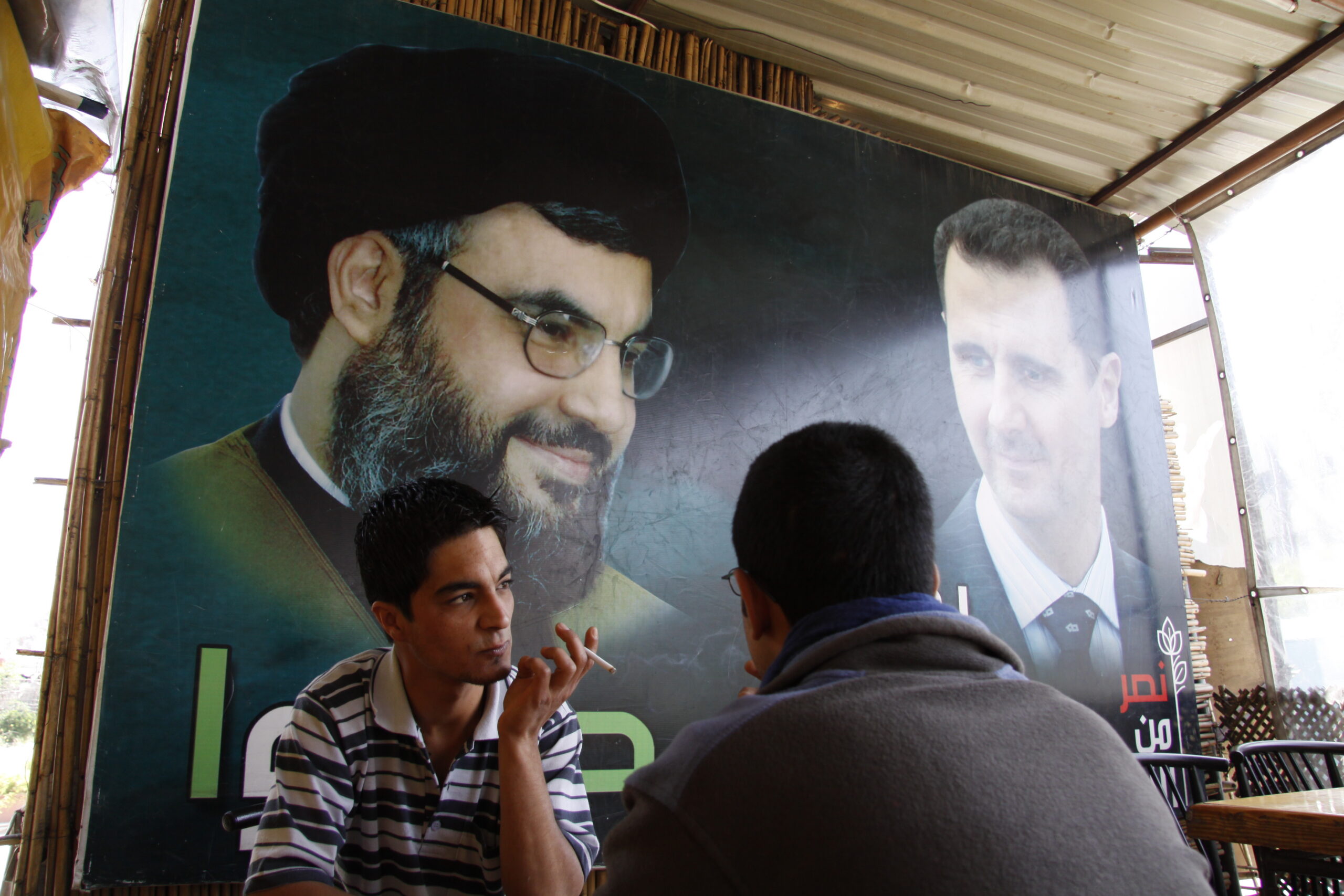
In Lebanon, a photo report by the Associated Press shows members of the Syrian Shiite community who fled to neighbouring Lebanon after the fall of Assad, fearing retaliation. They now reside in a Hezbollah-sponsored compound in al-Hermel (near the Lebanese-Syrian border), filled with huge images of Shiite figures such as Ayatollah Ali Khamenei, Hassan Nasrallah, and Qassem Soleimani. The Lebanese state itself remains extremely weak, entangled in deep economic and political crises, with no capacity to control Hezbollah, whose leadership has repeatedly stated that Lebanon would stand by Iran in the event of war. Under such circumstances, Assad loyalists could find both the motivation and the networks to re-engage and may seek renewed empowerment.
If regional chaos spills into Syria, the consequences could be lethal: renewed identity clashes, accelerated radicalisation, and the collapse of fragile stabilisation efforts.
Therefore, the current government must prioritise risk management. It should maximise efforts to secure borders, contain militias, and prevent external actors from instrumentalising Syrian territory as a proxy battlefield.
Once again, Syria and the Syrian people stand at a crossroads while regional and international powers struggle to reshape the map. The government must carefully weigh the risks of action against the risks of inaction. It should focus on consolidating the country’s transition away from conflict and preventing any slide into a new and potentially even more destructive phase of war.
Picture source: Ola Rifai. Damascus, May 2009.