
America’s Midterm Elections: Messages for Syria

By Ola Rifai
On Tuesday night, Americans and people around the world were stunned as the Democratic Party won both the House and the Senate in a sweeping victory in the US midterm elections. Donald Trump’s de facto power is now being challenged.
Ironically, many states that voted for Trump by double-digit margins two years ago, and that are historically known as Republican strongholds (like Ohio and Texas), turned to the Democrats in this election. In just two years, Trump administration policies have altered their traditionally inherited ideological views.
Meanwhile, the Mamdani phenomenon seems to be spreading among many American politicians of his generation. Indeed, this indicates a deeper issue that goes beyond any political dispute between Republicans and Democrats, as well as economic grievances over inflation and wars.
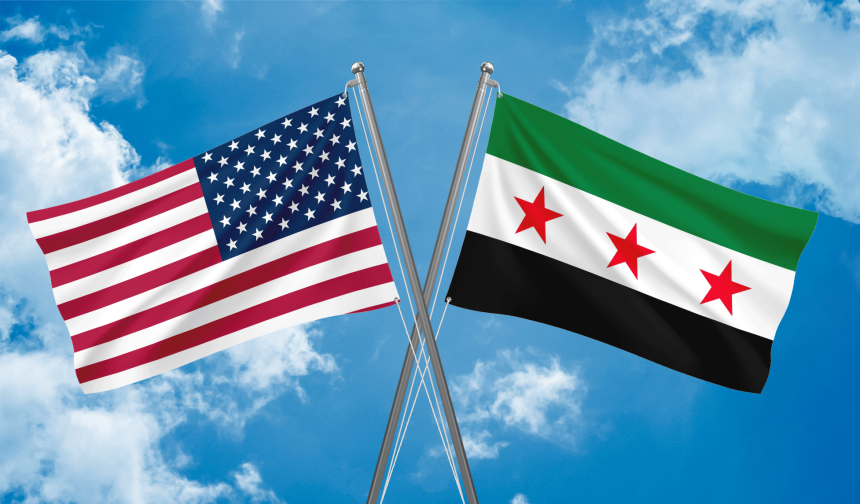
In a brilliant piece published in Foreign Affairs today, Daniel W. Drezner and Elizabeth N. Saunders argue that Trump, the ‘lame duck’, might now lash out internationally, potentially resulting in more chaotic wars. The authors suggest that Iran and Cuba might bear the burden of this lame-duck presidency. Although they do not mention Syria, a newly emerging American ally, the country might become a useful bargaining chip in Trump’s foreign policy adventures before he leaves office. This could happen either through pressuring the Syrian government to become more involved in Lebanon (against Hezbollah) or in Yemen (against the Houthis). President al-Sharaa is trying to resist such attempts, but he might not be able to do so if the pressure comes from Saudi Arabia and America, his main supporters.
There is no clear rationale behind Trump’s wars or policies. Rather, they reflect competing powers seeking to leverage regional chaos for their own political adventures. Surely enough, war-torn Syria does not need this. Neither does a region already filled with failed states need to bear the consequences of lame-duck gambits. Well, last night’s results carry messages for the Syrian government and for the Syrian people as well.
For the Syrian government, relying solely on foreign affairs at the cost of domestic politics and neglecting internal crises will backfire at some point and threaten its own grip on power.
It is understandable that post-conflict countries should work to reshape their foreign policy and gain international legitimacy to validate their rule. Yet, in a context like Syria, with multilayered crises (humanitarian, economic, social, and security-related), the government’s priority should be addressing these issues, and this should go hand in hand with a constructive foreign policy. Instead, alas, we have seen the government’s inability to address serious flaws.
Having said that, reshaping foreign policy and seeking international support after decades of isolation are vital for political and economic recovery. Equally important is rebalancing regional alliances amid the many shifts in the international order. And one should admit that the Syrian government has mastered this, with the help of the US and Saudi Arabia. However, important as this is, foreign policy should also be reflected in domestic politics and internal rhetoric, and this has not been the case in Syria as the focus seems to be on consolidating power rather than addressing internal crises and their root causes.
For those Syrians who are celebrating the victory of Abdul El-Sayed, who became the first Muslim elected to the US Senate, perhaps you should draw some lessons from how a member of a minority group (an Arab, a Muslim, and the son of immigrants) has won the minds and hearts of many Americans. Like Zohran Mamdani, the Mayor of New York, he is not apologetic about his beliefs, his background, or his multiple identities.
In this vein, a very common phrase used by many Syrians when commenting on new figures in government or the army, or civil institutions is beyshbaouna (they look like us). This phrase reflects a bleak emphasis on the divisions within society, and the line people draw between ‘us’ and ‘them’.
Well, after his victory yesterday, perhaps they should turn on their TVs and acknowledge that Abdul does not necessarily look, think, or talk like all the Americans who voted for him.
After suffering for so long from Islamophobia and the aftermath of 9/11, young voters have voted for a Muslim, hoping for better governance. This should encourage many Syrians to step outside the identity boxes in which they are trapped and think beyond the majority/minority lens.
In this light, the MAGA movement and Trump’s promise to Make America Great Again might have similarities with the rhetoric of some official and public figures in Syria, or what they like to refer to as Souriya al-Jadida (The New Syria). Radical speech, the provocation of racial tensions, and, to a large extent, hateful rhetoric against minority groups have eventually backfired, costing political actors their support and power.
There are huge differences at the historical, political, legal, institutional, and social levels between the Syrian and American cases. However, it would be useful to draw some lessons and take a moment to reflect.